The first thing we pulled out of a North End estate cleanout last spring was a coffee can with about $340 in it, wedged behind a workbench.
Two hours later a savings bond from 1978 slid out of a cookbook when somebody set the book in the donate pile.
Nobody in that family was careless. They were worn out. Eleven rooms, a listing date coming, and three siblings trying to agree on one Saturday.
That's the part people don't see coming. The hard part isn't the lifting. It's deciding, on four hours of sleep, what's trash and what your mom spent thirty years quietly tucking where a burglar would never look.
Where money actually hides in an estate cleanout
People who grew up in lean years didn't keep it all at the bank.
We've found cash in the freezer, wrapped in foil like leftovers. Envelopes taped under dresser drawers. Rolled bills inside a hollow curtain rod in a Nampa rancher.
Books are the big one. Anything with pages becomes a filing cabinet eventually. Fan them before a box goes anywhere.
Coat pockets. Handbags stacked three deep on a closet shelf, old wallets, film canisters, the pill bottle with no pills in it. Check anything that closes.
It's ten minutes a room. Probably the best ten minutes you'll spend all week.
And yes, we look too. Our crews set anything that looks like cash, jewelry or paperwork aside and hand it over. That's just how this ought to work.
The paperwork matters more than the furniture
Here's what surprises families around the Treasure Valley. The couch is worth almost nothing. The shoebox on the closet shelf might be worth a lot.
Life insurance policies from the sixties and seventies still pay out if the premiums were finished. Savings bonds don't quietly expire.
Paper stock certificates are still real shares. So are deeds, vehicle titles, and the little key to a safe deposit box nobody knew about.
Military discharge papers matter too. The VA burial benefit runs through them, and a replacement copy takes weeks you probably don't have.
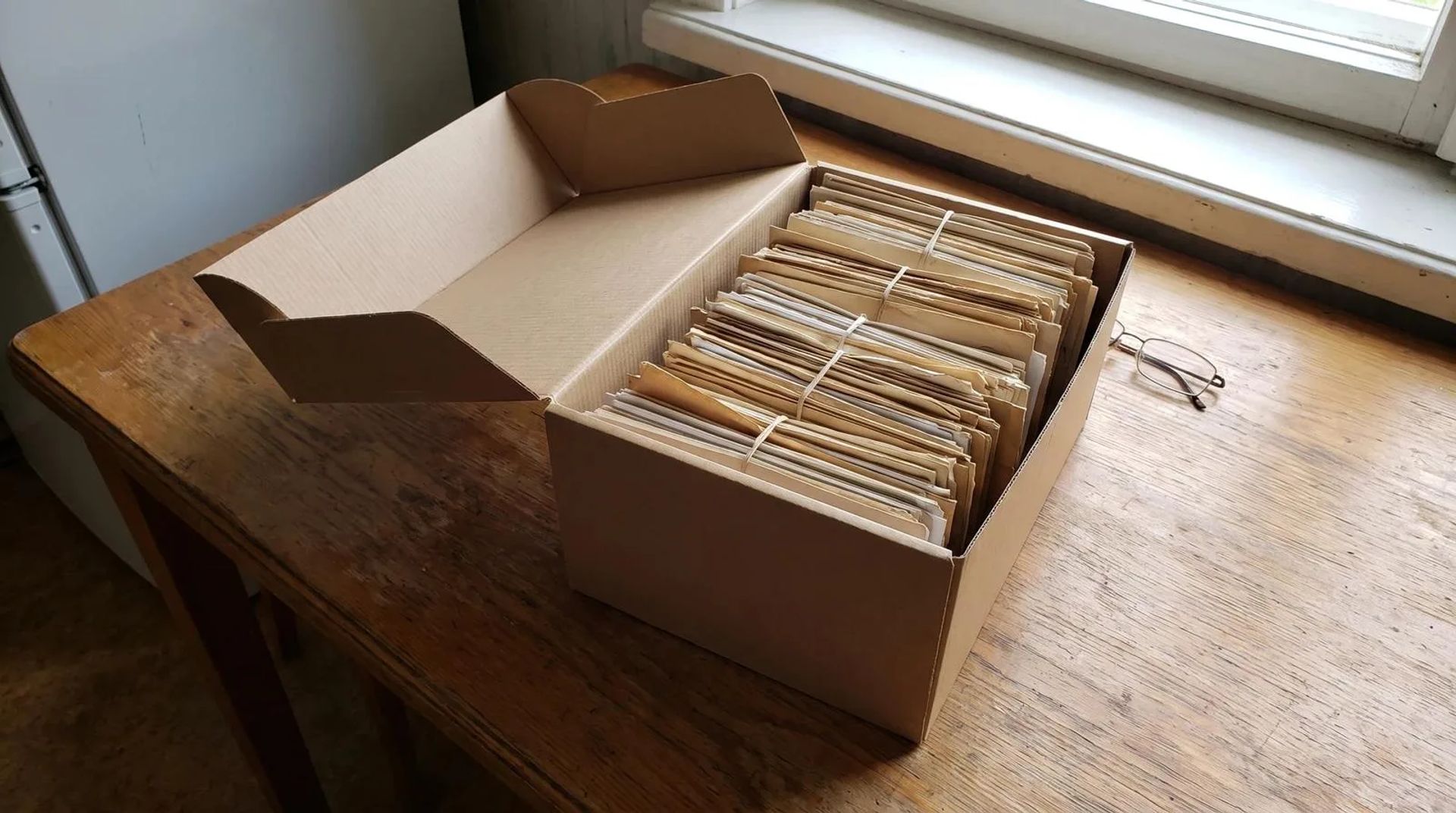
Tip: Put one plain box by the front door for every scrap of paper you're not sure about, and don't sort it in the house. Sorting paper while you're standing in a bedroom takes four times as long. Do it later at a kitchen table with coffee.
Address books count as paper worth keeping, by the way. When it's time to tell people, that little book is often the only list that exists.
What families regret tossing
Photos. Every time. Especially the unlabeled ones, since those feel worthless in the moment and turn irreplaceable about six months later.
Handwritten letters and recipe cards land the same way.
Tools go out fast and shouldn't. A garage of decent hand tools in Meridian or Eagle is often the most sellable thing on the property, and it reads as clutter to anyone who doesn't know tools.
Jewelry is the sneaky one. Real pieces almost always sit mixed into a dish of costume stuff, because nobody separates them while they're alive. They already know which is which.
What do people rarely regret? The china. The encyclopedias. The dining room hutch.
Brown furniture just isn't selling right now, and watching a family burn three weekends chasing $80 for a sideboard is hard to sit through.
Yes, we'd love your business. But if that garage is full of tools, or the house has anything with real age on it, get somebody who knows that stuff to walk through before you hire anyone to haul. A one-hour appraisal has covered a whole cleanout more than once.
How to prep before an estate cleanout crew shows up
Walk every room with your phone and shoot photos before anything moves. It settles arguments later, and it jogs memory when a cousin asks about a specific chair in October.
Then pick one room to be the keep room. Anything the family claims goes in there, door shut. We don't touch that room, and it beats tagging four hundred separate items.
Do you have to sort the whole house first? No. Trying to pre-sort everything is what stalls families for months, so pull the valuables and the paper and let a crew handle the volume.
On timing, plan on a room in a day and a full home over three to five days. Add time for a packed garage or a basement.
Cost tracks volume, stairs, and how many runs to the Ada County landfill it takes. A small apartment lands in the few-hundred range. A loaded four-bedroom with a garage runs into the low thousands.
One seasonal note. In July we start at seven, because a Boise garage clears a hundred degrees by early afternoon and nobody makes good decisions in that kind of heat.
Winter is the opposite problem. Clear a path and salt the walk. Frozen steps slow a crew down, and that's billable time.
Bottom line
Slow down for the small stuff and move quick on the bulk. Cash, paper, photos and jewelry come out first. Furniture and volume are the cheap part.
If you're staring at a house in Boise, Meridian, Nampa, Caldwell or anywhere else in the valley and don't know where to start, give us a call at (208) 330-3615.
Happy to walk it with you and give you a straight number, even if you end up handling part of it yourself.
