Back to Blog
You've made the decision to get help with a hoarding situation. That's a big step. But what actually happens when a professional crew shows up? What does the process look like?
Here's a walkthrough of how professional hoarding cleanup typically works, from first contact to final cleaning.
Phase 1: Initial Assessment
Before any cleanup begins:
Confidential phone conversation. You describe the situation without judgment. This helps the company understand what they're dealing with and whether they're the right fit.
On-site evaluation. For significant hoarding, someone needs to see the actual conditions. This isn't about shock or judgment—it's about accurate assessment. They'll look at volume, accessibility, potential hazards, and special concerns.
Detailed estimate. Based on the assessment, you get a breakdown of expected costs, timeline, and what's included. Good companies explain their pricing clearly.
Planning conversation. Who needs to be involved? Will the person with hoarding disorder be present? Are there items that must be saved? Are there safety concerns like biohazards? This planning prevents problems later.
Phase 2: Preparation
Before the crew arrives:
Identify must-save items. If there are specific items that absolutely must be kept or found—documents, jewelry, photos, medications—communicate this clearly. The crew will set these aside as they're found.
Discuss involvement level. Will the person be present? For how long? Will they make decisions on items, or has someone else been designated? Clear expectations prevent conflict during cleanup.
Notify relevant parties. Neighbors may notice increased activity. If there are landlords, case workers, or code enforcement involved, they may need to know the timeline.
Prepare emotionally. This is hard. Even with professional help, watching belongings leave can be distressing. Having support in place—a friend, family member, or therapist—helps.
Phase 3: The Actual Cleanup
How the work typically proceeds:
Safety first: The crew assesses hazards and sets up accordingly. This might mean protective gear for biohazards, careful navigation of unstable piles, or pest management
Room by room: Systematically working through the space prevents chaos. One area is cleared before moving to the next
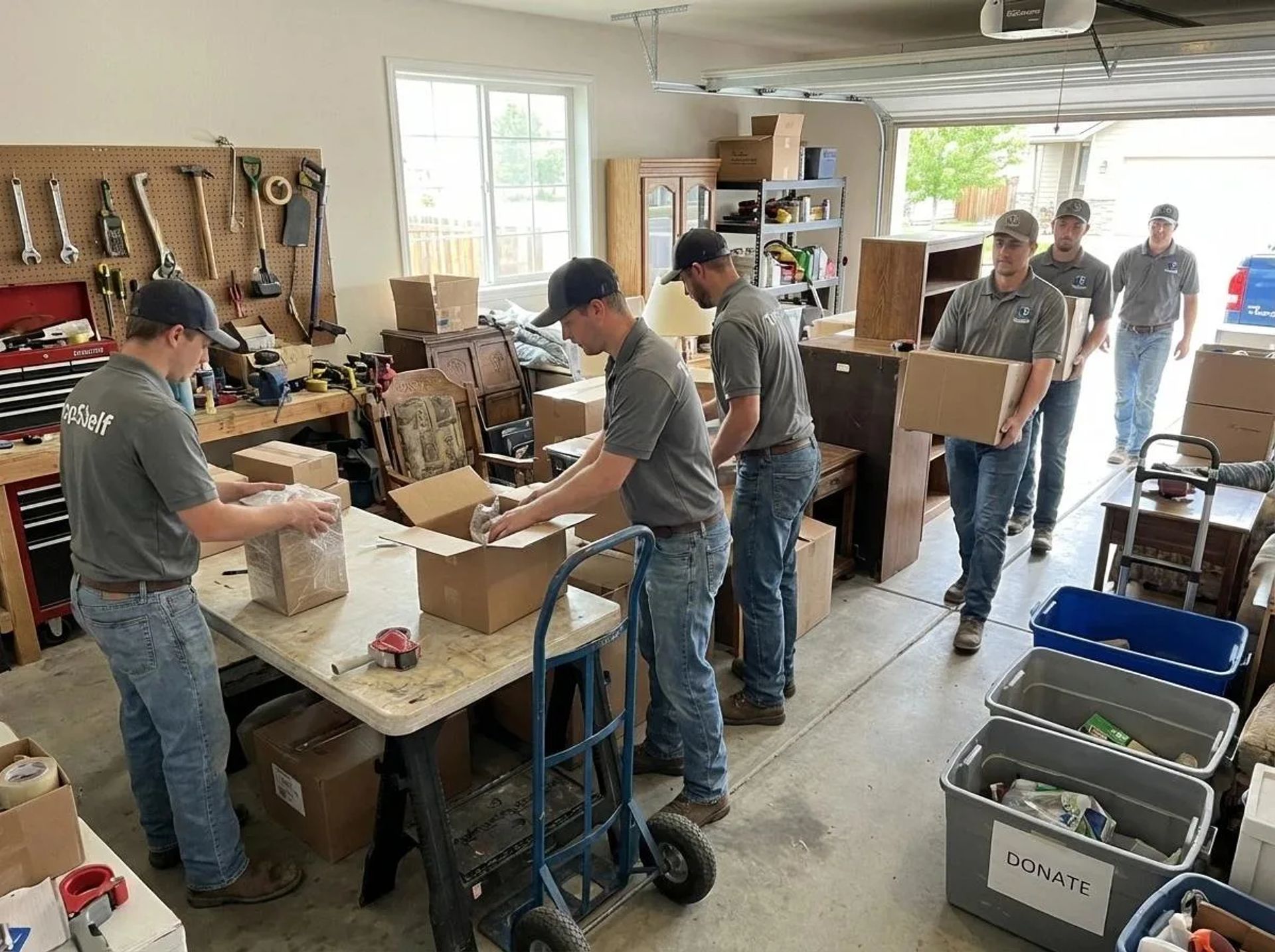
Sorting as they go: Items are typically sorted into categories—keep, donate, recycle, trash. Valuables and documents are set aside
Regular communication: Good crews check in with family members or designated contacts. "We found these photos—should we set them aside?" "This room is clear—want to see it?"
Load and haul: Items leaving the home go onto trucks and are properly disposed of, recycled, or taken to donation centers
Timeline varies dramatically—a day for minor situations, a week or more for severe hoarding.
Phase 4: After the Items Are Gone
Once the clutter is removed:
Condition assessment. Now you can actually see the floors, walls, and fixtures. This often reveals damage that needs attention—water stains, pest damage, mold, or structural issues.
Deep cleaning. Professional cleaning removes accumulated dirt, odors, and residue. This is usually separate from the cleanup service itself.
Remediation if needed. Biohazard situations, mold, or pest infestations require specialized treatment before the space is truly safe for habitation.
Repairs. Depending on condition, the home may need work—flooring replacement, painting, plumbing or electrical repairs, appliance replacement.
How Hoarding Cleanup Differs From Regular Junk Removal
This isn't just hauling stuff away:
Sensitivity required. Professional hoarding cleanup crews understand the emotional dimension. They don't joke about the mess or express disgust. They work respectfully.
Careful sorting. Regular junk removal crews load and go. Hoarding cleanup requires checking items, watching for valuables, preserving what matters.
Hazard awareness. Hoarding situations often involve conditions regular crews aren't trained for—biohazards, unstable piles, structural concerns.
Flexible pacing. If the person needs breaks or time to process, good hoarding cleanup services accommodate that rather than rushing through.
The Bottom Line
Professional hoarding cleanup is a structured process: assessment, preparation, the cleanup itself, and restoration of the space. Each phase matters for a successful outcome.
The right cleanup service makes this as smooth as possible—but it's still hard. Clearing a hoarded home is emotionally intense for everyone involved. Having realistic expectations helps.
Most importantly, remember that the physical cleanup is just one piece. Long-term success requires addressing the underlying condition that led to hoarding in the first place.
Ready to Start the Process?
We handle hoarding cleanups throughout Boise, Meridian, Nampa, and the Treasure Valley. Confidential consultations, compassionate service.
More Hoarding Resources
View All Posts
