Back to Blog
You can see the problem clearly. The house is becoming unsafe. You're worried about their health, their isolation, maybe even a fire hazard. You want to help, but everything you've tried has backfired.
You're not alone. Millions of families deal with hoarding, and the path to helping is rarely straightforward. Here's what actually works—and what makes things worse.
What Doesn't Work (and Makes Things Worse)
These well-intentioned approaches typically backfire:
Surprise cleanouts. Coming in while they're gone and clearing everything out feels like a violation. It destroys trust and often accelerates re-hoarding as they try to regain control.
Throwing things away without permission. Even if it looks like garbage to you, removing items without consent creates trauma and makes the person more protective of remaining possessions.
Ultimatums and threats. "Clean up or I'm not visiting" rarely motivates change. It more often leads to isolation and shame, which worsen hoarding behavior.
Arguing about the value of items. Logical arguments about why something should be thrown away don't work. The attachment isn't logical—it's emotional.
Shaming or expressing disgust. They already feel shame. Adding more drives them further into isolation and secrecy, not into action.
Understand Before Acting
Hoarding disorder is a recognized mental health condition. Understanding this changes how you approach it:
It's not laziness. People who hoard often feel overwhelmed by the clutter but genuinely cannot decide what to do with items. The problem isn't motivation—it's a processing difficulty.
Items feel like part of themselves. For someone with hoarding disorder, possessions can feel like extensions of their identity or memory. Throwing something away feels like losing a piece of themselves.
There's usually an underlying cause. Trauma, loss, anxiety, depression, ADHD, OCD—hoarding often accompanies or stems from other conditions.
They often don't see it the same way you do. What looks like a dangerous pile of garbage to you might look like useful items, important memories, or potential resources to them.
What Actually Helps
These approaches have better outcomes:
Lead with compassion. Express concern for their wellbeing, not disgust at their home. "I'm worried about you" lands differently than "This place is a disaster"
Focus on safety and function. Instead of tackling everything, identify specific problems: "Can we clear a path to the bathroom?" Small, focused goals feel achievable
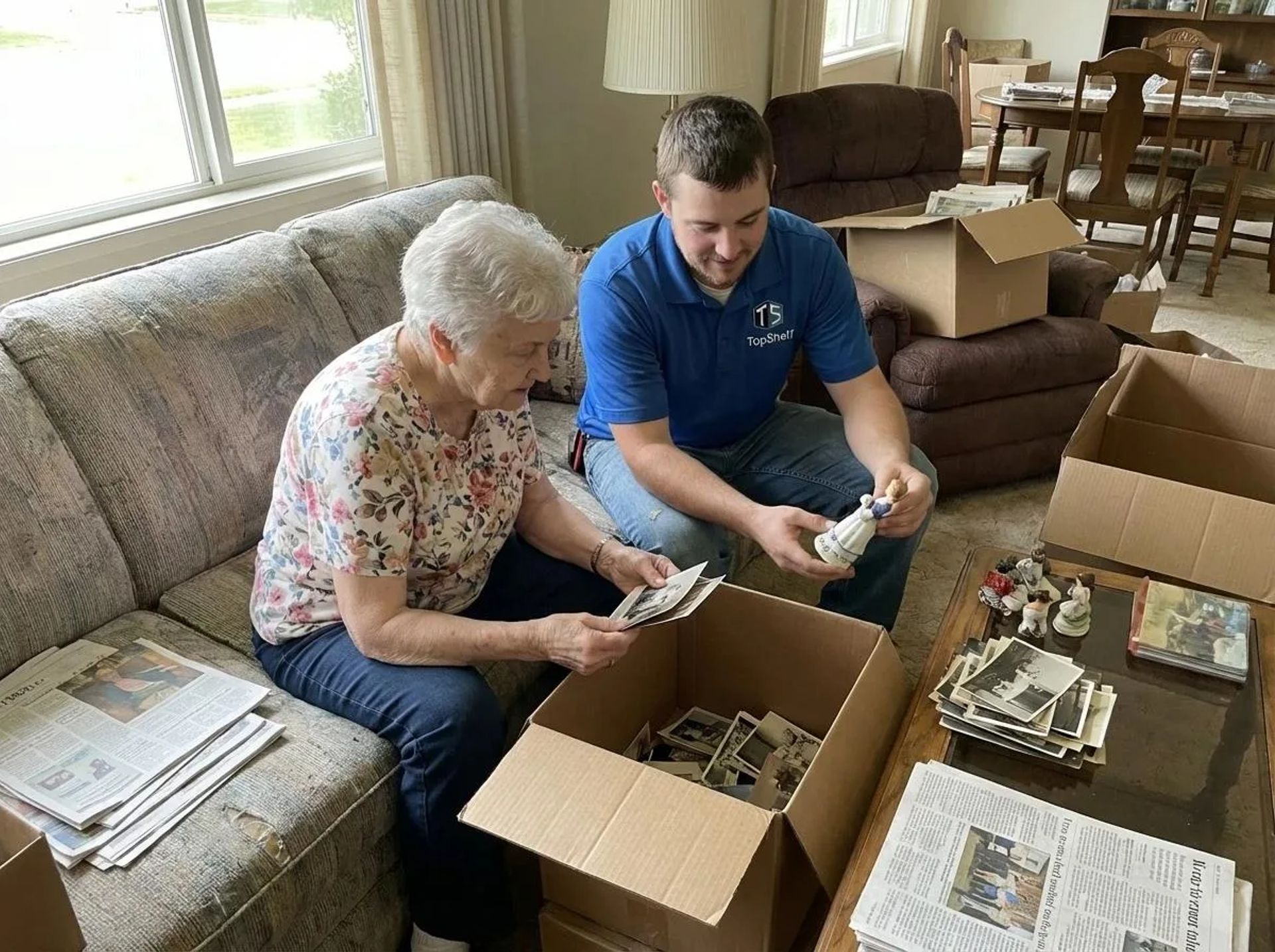
Let them make decisions. Don't touch anything without asking. Even if it takes longer, their participation in decisions prevents re-hoarding
Offer practical support. "I can help carry things to the car when you're ready" is more useful than "You really need to clean this up"
Maintain the relationship. Stay connected even if progress is slow. Isolation makes hoarding worse; connection provides motivation for change
When Safety Forces Action
Sometimes you can't wait for willing participation:
Code violations or eviction threats. When the city or landlord is involved, there's a deadline. Help them understand the consequences and offer to work alongside them.
Immediate health hazards. Pest infestations, structural damage, no running water, blocked exits—these require action even without full buy-in.
Children or vulnerable adults involved. Child or adult protective services may need to be involved if others' safety is at risk.
Even in emergencies, try to involve the person as much as possible. Explain what's happening and why. Let them make whatever decisions they can. Forced cleanouts should be a last resort, not a first response.
Professional Resources
You don't have to figure this out alone:
Therapists specializing in hoarding. Cognitive Behavioral Therapy (CBT) is the most effective treatment. Look for providers with specific hoarding experience.
Professional organizers. Some specialize in hoarding situations and work alongside therapists to provide practical support.
Support groups for families. Connecting with others who understand helps you process your own feelings and learn what's worked for others.
Hoarding cleanup services. When it's time for the physical cleanup, professionals who understand hoarding work differently than regular junk removal. Look for companies that work compassionately and involve the person in decisions.
The Bottom Line
Helping someone with hoarding disorder is a marathon, not a sprint. Quick fixes usually backfire. Lasting change takes time, patience, and a consistent compassionate presence.
Your role isn't to fix them—it's to support them while they work on change. That might feel frustrating, but it's the approach most likely to actually help.
And take care of yourself in the process. You can't pour from an empty cup. Get your own support, set boundaries where needed, and remember that you're doing the best you can with a difficult situation.
Need Professional Hoarding Cleanup?
When your family is ready for cleanup, we approach every situation with compassion and discretion. Serving Boise, Meridian, Nampa, and the Treasure Valley.
More Hoarding Resources
View All Posts
