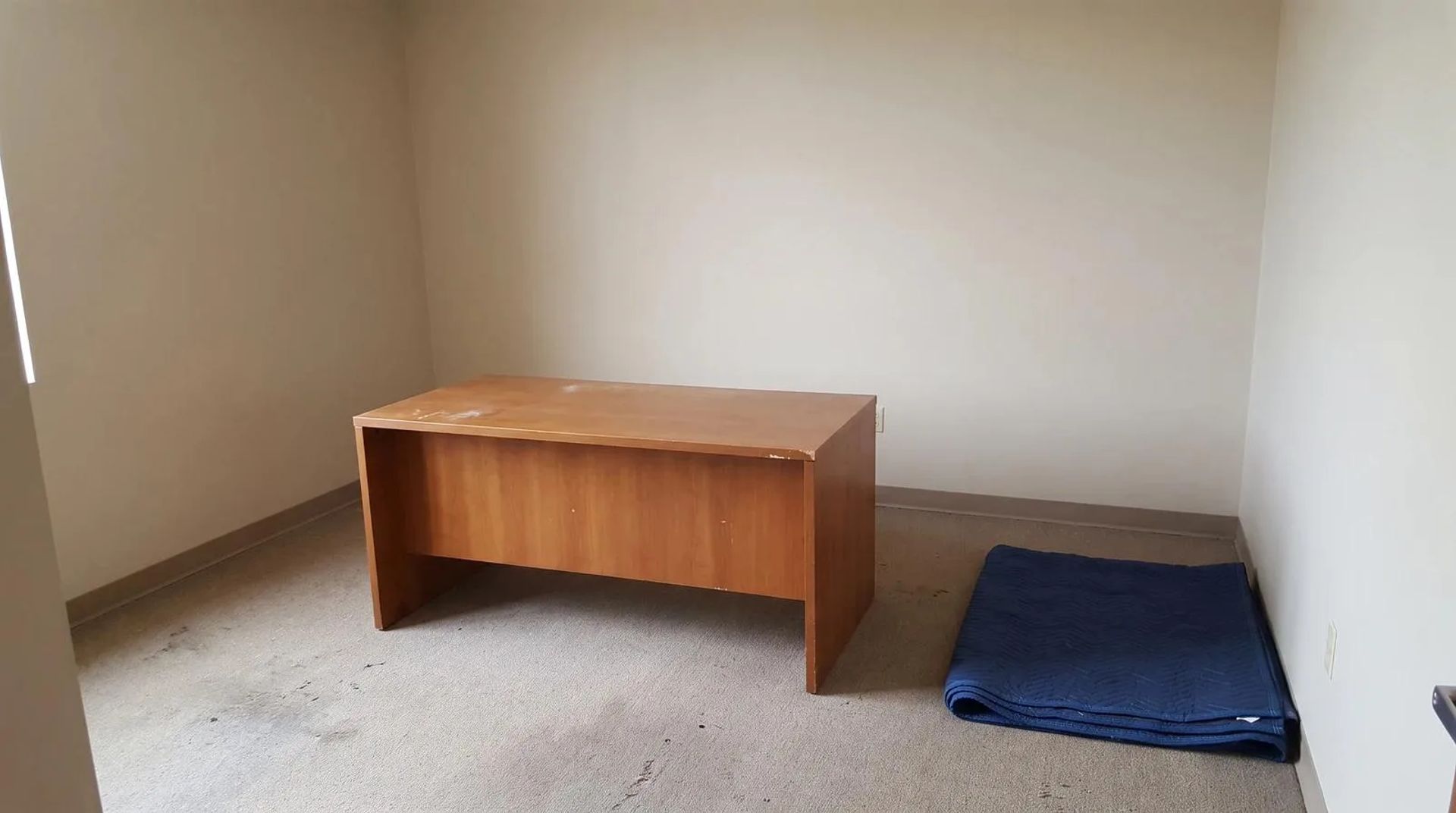
The last thing most people carry out of a closed business is something small. A framed photo, the good stapler, a coffee mug. Then they turn around, look at the back room, and realize the commercial cleanout hasn't started yet.
That's usually when the phone rings. A closing in Boise or Meridian almost never goes sideways because of the desks out front. It goes sideways because of the six years of stuff behind the door somebody labeled Storage.
If you're winding down a business, or you're a landlord standing in a space a tenant walked away from, here's what the work actually looks like.
Your lease decides half of the commercial cleanout
Most commercial leases around the Treasure Valley say you return the space in the condition you got it, minus normal wear. Fine. But there are usually two lines buried in there that matter more than the rest.
First is fixtures. Shelving you bolted to the wall, the sign bracket out front, the extra circuit you ran for the espresso machine. Some of that is yours to take. Some of it legally became the building's the day you installed it, and pulling it out can cost you more than leaving it would have.
Second is the surrender date. Rent usually keeps running until the space is empty and the keys are back, so being four days late costs real money on a space you're not even using anymore.
Heads up: Before you unbolt anything, email your landlord and ask plainly what they want left behind. Name the specifics: shelving, counters, window coverings, the mop sink. A written yes or no takes them ten minutes and settles every argument that would otherwise show up at deposit time.
What actually slows a commercial cleanout down
Furniture moves fast. We can clear an average office suite of desks and chairs in a day, sometimes less. What eats the schedule is everything nobody wrote down.
Filing cabinets are the big one. Paper is heavier than people expect, and a four-drawer lateral packed full is a two-person lift down a stairwell. Old monitors and printers cost time too, because e-waste has its own fees and its own drop point and can't ride along in the trailer to the Ada County landfill.
Then there's the stuff with rules attached. A fridge or a walk-in cooler holds refrigerant that has to be recovered by somebody certified. Leftover paint from the remodel, solvents in a shop bay, cleaning chemicals under the sink. None of it belongs in a dumpster. Ada County runs a household hazardous waste program, but a business isn't a household, and commercial quantities usually need a different route.
We watched a simple Nampa office job double in length because a back closet held forty gallons of paint from three tenants ago. Nobody working there knew it was in the building. Somebody still had to deal with it.
Records, hard drives, and what can't go on the curb
Customer files, employee records, five-year-old tax paperwork. Anything with somebody's name on it shouldn't go loose into a dumpster behind the building, and a shared dumpster in a Meridian office park off the Ten Mile corridor is about as private as a bulletin board.
Shred it, or pay someone to shred it. Same thinking with the computers. Pull the drives before the towers leave the building, even if you're sure they were wiped.
Does that slow the job down? A little. It's still one of the few parts of a cleanout we'd tell you to handle yourself, or at least stand there and watch. Not because it's hard. Because it's yours.
What a commercial cleanout costs around the Treasure Valley
Pricing follows volume and labor, not square footage. Two thousand square feet of empty carpet is cheap. Twelve hundred square feet stacked to the ceiling is not.
A small office suite that's mostly furniture and paper, done in a day, usually lands in the high hundreds to low thousands. A restaurant, salon or shop with equipment, heavy fixtures and chemicals runs several times that and can stretch across three to five days. Rental turnovers in Nampa or Caldwell tend to sit somewhere in between, depending on what the last tenant left.
What pushes a quote up is boring and predictable. Access is most of it. Stairs with no elevator, nowhere to back a trailer, a downtown Boise alley where you can only sit so long before you're in somebody's way. Disposal fees on appliances, tires and electronics add up on their own. July does its part too, because a warehouse with no air conditioning is an oven by eleven in the morning and the crew has to slow down to stay safe.
Give yourself the week you don't think you need
Most people building a closing timeline forget the last mile. The space looks empty, and then you find the mezzanine, the crawl space above the office, the conex out back nobody's opened since 2019.
Build in a buffer. If your lease ends on the 31st, aim to be done on the 25th. Winter makes that buffer worth more, because icy back lots and dark at five o'clock quietly cut a work day short.
Bottom line
A commercial cleanout is mostly a scheduling problem with heavy lifting attached. Read the fixture clause early, find the chemicals and the paper before the last week, and give yourself more days than the space looks like it needs.
If you want a second set of eyes before you commit to a date, call Boise Hoarding Cleanup at (208) 330-3615. Walk us through the space and we'll tell you straight whether it's a one-day job or a three-day one. Either answer is worth knowing.
