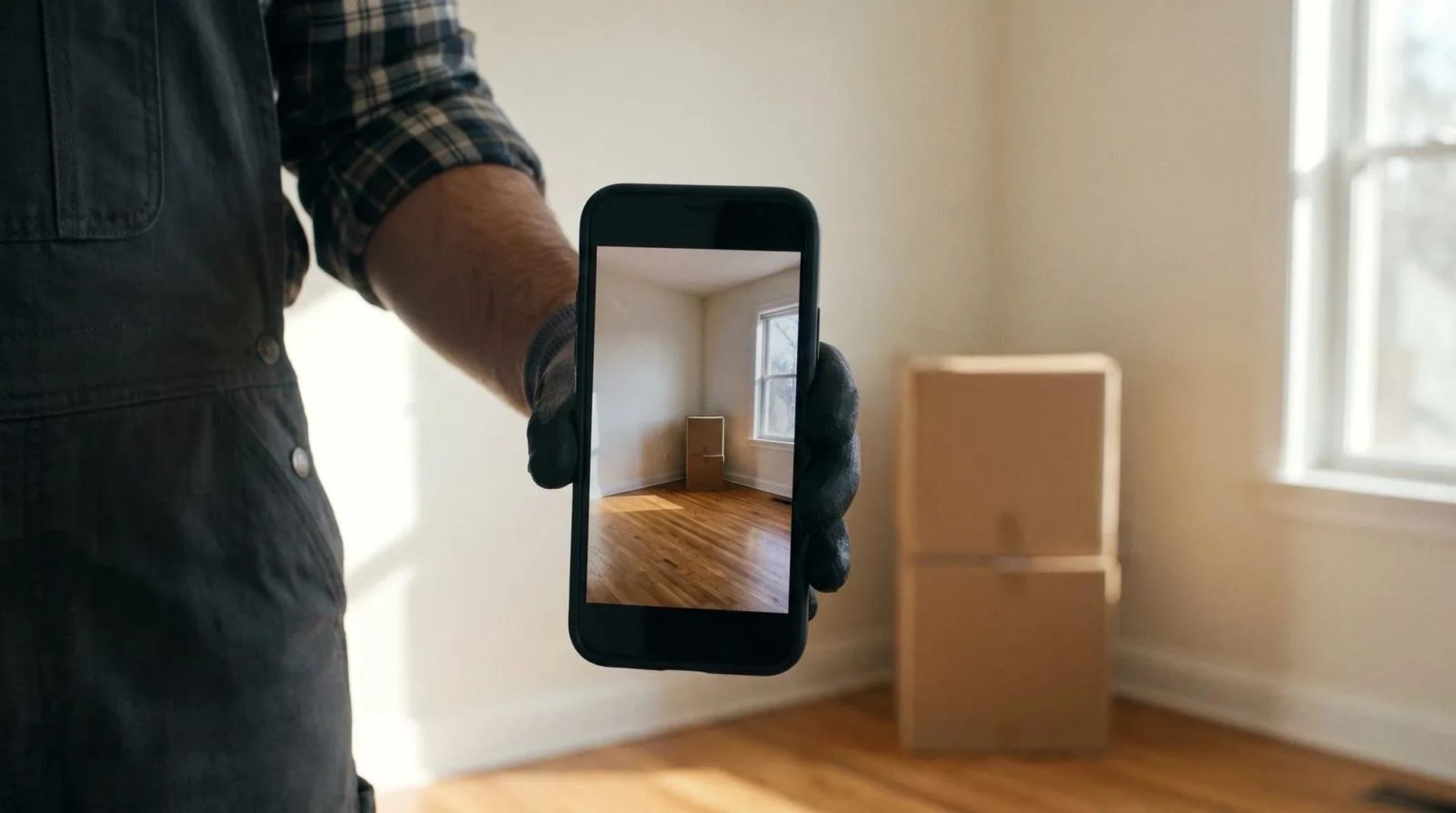
A landlord out near Karcher Road in Nampa called us last spring about a rental cleanout at a duplex. The tenant had been gone about a week. He'd already made two runs to the landfill on his own before he picked up the phone, and he had four photos to show for it, all shot from the doorway, all dark.
He wanted to charge the cost against the deposit. Fair enough.
Problem was, most of what he planned to bill for was already buried out at the Ada County landfill.
That's the part people miss. What you can prove is worth about as much as what you haul. You can do the work right and still lose the argument three weeks later.
Photograph the rental cleanout before anything moves
Start wide. One shot of every room from the doorway, lights on, before anybody carries a single box out the door.
Then go close. Stained carpet, a cracked slider, cabinet doors hanging off their hinges. Anything you'd want a mediator to see without having to imagine it.
Don't skip the garage, the yard, the shed, or the crawlspace hatch. That's where the surprises live in older Boise rentals, especially in the North End and on the Bench, where detached garages and half-finished basements are the norm.
And grab something that fixes the date. A meter reading works. So does a mailbox packed with a week of mail.
Tip: Keep the original photos on your phone, not screenshots and not images you texted to yourself and saved back out of the thread. Screenshots strip the timestamp and location data that make a photo worth something later. Back the originals up somewhere before the phone dies or gets traded in.
What a rental cleanout invoice should actually say
"Cleanout, $1,850" isn't much of an answer when a tenant disputes the deduction.
A useful invoice breaks out labor hours, crew size, and disposal weight or volume. Anything that needed special handling gets its own line. Needles, spoiled food from a fridge that sat dead through a July week, animal waste. That costs more because it genuinely is different work.
Ask for the scale tickets too. Ada County weighs by the ton, and a landfill receipt is about as neutral a piece of evidence as you're going to get.
What does a cleanout actually run? Depends almost entirely on volume. A light one-bedroom can land in the few-hundred range, a packed house with a full garage runs into the thousands, and anyone who gives you a firm number over the phone without seeing the place is guessing.
We write our invoices this way by default. Not because we love paperwork, but because half our landlord clients forward the invoice straight to a tenant or an attorney, and a vague one just comes back with questions.
Idaho's deposit clock is shorter than it sounds
Idaho generally gives a landlord 21 days to return a deposit and account for deductions, or up to 30 if the lease spells that out. Check with your own attorney on how it applies to your situation. Plan around the short end either way.
Three weeks sounds like plenty until you try to schedule inside it. Turnover season across the Treasure Valley is rough from late spring through August. Everybody moves at once, and the last week of the month books up before the middle does.
A one-bedroom apartment is usually a single day. A packed three-bedroom with a full garage runs three to five days once you count the dump runs. Add time if it's January and the driveway is a sheet of ice, or if it's 100 out and the crew has to rotate in and out of a unit with no working AC.
So call while you're still standing in the place doing your walkthrough. Not two weeks later, when the calendar has already closed in on you.
Two rental cleanouts that need extra care
When the unit is in hoarding condition
Sometimes a tenant leaves behind years of accumulated belongings, not trash. That's a different job, and it deserves a different approach.
Hoarding is a mental health condition, and the person who lived there is usually still working through it. So we sort instead of shovel.
Paperwork, photos, ID documents, medications. Anything that looks like it matters gets set aside instead of tossed.
Idaho also has rules about holding a tenant's abandoned personal property, and a cleanout that ignores them can cost you more than the deposit ever would have.
We can box and label the keepers so you have something to return or store. It adds labor. It's usually cheaper than the alternative.
Commercial and office turnovers
A vacated suite along the Ten Mile corridor in Meridian, a shop bay in Caldwell, a small retail space in Eagle. Same principle, higher stakes, because commercial leases usually put restoration on the tenant in writing.
Shoot the ceiling grid and the flooring. Get the wall anchors where shelving came out, and the condition of the roll-up door. If the lease says broom clean or return to shell, your before-and-after photos are what settle whether that happened.
These spaces also hold things a house doesn't. Old fluorescent tubes and ballasts, dead electronics, sometimes a chest freezer nobody has opened in months. Those get handled separately, and they should read as their own line on the invoice.
Bottom line
Hauling is the easy part. Photos before, an itemized invoice after, disposal receipts in hand, and a schedule that respects the 21-day window. That's what makes a deduction hold up when somebody questions it.
If you're standing in a unit right now trying to figure out where to start, take the photos first. Then give us a call at (208) 330-3615 and we'll tell you straight whether it's a one-day job or a three-day one. No pressure either way.
