The house can sell fast. Then the family opens the garage, and everything stops. That's the usual order of operations on a Boise estate cleanout.
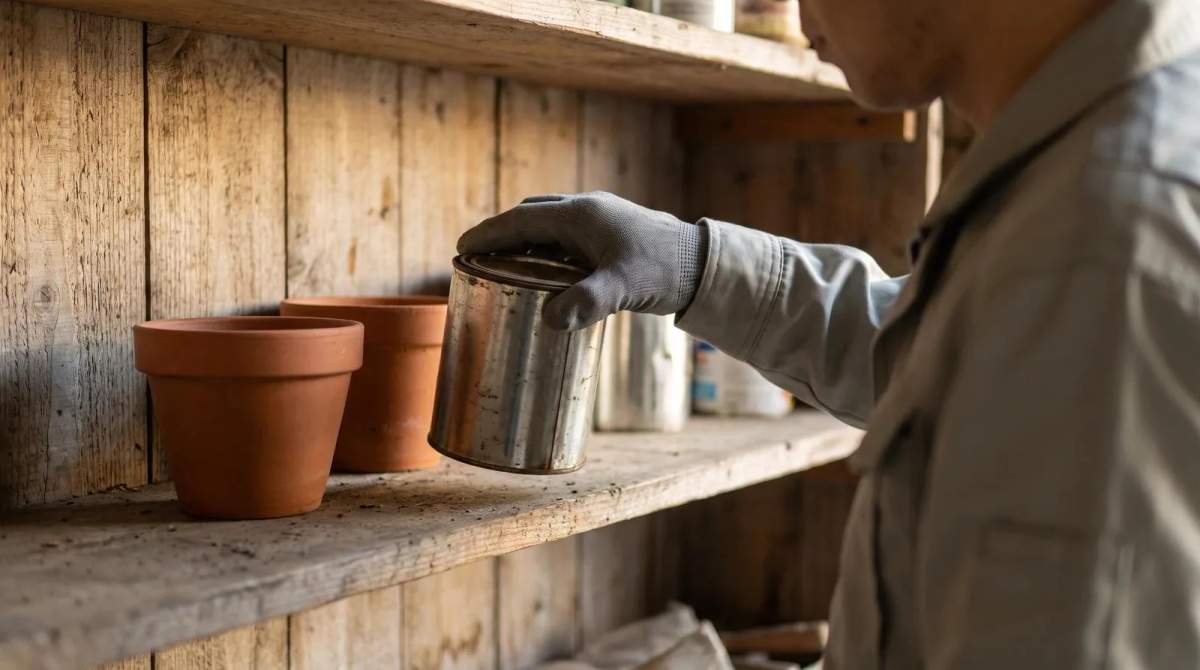
Picture a two-car garage with a wooden shelf running the whole back wall. Cans and cans of paint. A propane tank or two, sometimes still partly full.
A milk crate of motor oil, a jug of something with the label worn off, and a coffee can of nails sitting on a box of shotgun shells.
"I have no idea what any of this is" is the normal reaction. Furniture and clothes are easy calls, but the garage is where people stall out, because guessing wrong feels risky and nobody wants to be the person who put something dangerous in a dumpster.
So here's the plain version of what happens to that shelf.
What the landfill won't take in a Boise estate cleanout
Ada County landfill takes household junk all day long. What it won't take is liquid paint, solvents, pesticides, pool chemicals, a gas can with gas still in it, automotive fluids, or anything pressurized.
Those get pulled out and run to the household hazardous waste drop-off instead. Canyon County has its own site, which is the one you'd use out of Nampa or Caldwell.
That part surprises people. You can rent a 20-yard dumpster, fill it over a weekend, and still be standing there Sunday night with a pile the hauler flat out won't take. We've cleaned up after exactly that more than once.
Batteries, fluorescent tubes and old electronics are their own category. A tube TV from 1998 has a disposal fee attached to it, and while it isn't much, it's better to know before you're already sweating in a driveway in July.
Heads up: Latex paint isn't hazardous once it's fully dry. If a can is less than a third full, pull the lid, stir in cheap cat litter or sawdust, and let it harden with the lid off. Dry latex goes out with the regular trash. Oil-based paint, stain and thinner never qualify for that trick, so keep those cans separate from the start.
Paint is almost always the biggest pile
Homeowners keep paint. It's close to a rule. There's a can for every room in the house, plus a few colors from a place they moved out of in 2003.
Most of it is dead. Paint that's sat through fifteen Treasure Valley summers in an uninsulated garage, hitting 110 in August and freezing solid in January, has separated for good.
If it looks like cottage cheese when you stir it, it's not going back on anybody's wall.
Is any of it worth keeping? A little. Hang on to whatever matches the colors on the walls right now, because buyers like finding a labeled quart for touch-ups.
Everything else is disposal. Oil-based cans and small solvent containers get boxed upright and driven to the hazardous waste site.
It's free for county residents, and it eats a good chunk of a morning. That's one of the quieter reasons people hand the whole garage off to a crew.
Guns, ammo and the stuff you shouldn't guess about
This is Idaho. We find firearms and ammunition regularly, and we don't touch either one.
A licensed FFL dealer or the sheriff's office is the right call, and it needs to come from the family rather than from us. Prescription medications go to a pharmacy take-back, not the trash and not the toilet.
Same goes for old lab bottles and unmarked containers of something crystalline. If nobody can identify it, we set it aside for people whose actual job that is.
One more thing catches families off guard in older homes, and Boise's North End is full of them. Floor tile, pipe wrap and popcorn ceiling material can contain asbestos, same as the pre-1980 places out toward Eagle and the older parts of Meridian.
We're not trying to scare anybody off a project. Just don't tear that material out yourself on a Saturday. It gets tested first.
Where the garage fits in a Boise estate cleanout
A full home usually runs three to five days. The garage and shop tend to eat one of those days on their own, more if there's a workbench and forty years of tools behind it.
Does the hazardous sorting cost extra? Some, though usually less than people brace for. A garage with a normal amount of paint and fluids might add a couple hundred dollars over a straight haul-off.
A shop with drums of used oil and an old fuel tank is a different conversation. We'd tell you that at the start instead of at the end.
What we won't do is quietly bury questionable material in the middle of a load. It's illegal, and it's the kind of shortcut that lands back on the family later.
The bottom line
Sort the garage into three piles before anyone hauls anything. Real trash, things worth keeping, and anything that pours, hisses, sparks or shoots. Only that third pile needs an expert.
If you're standing in front of a shelf you can't make sense of, call us at (208) 330-3615 and we'll walk through it with you. Even if you handle the rest yourself, it's a five-minute conversation that keeps a bad decision off your list.
