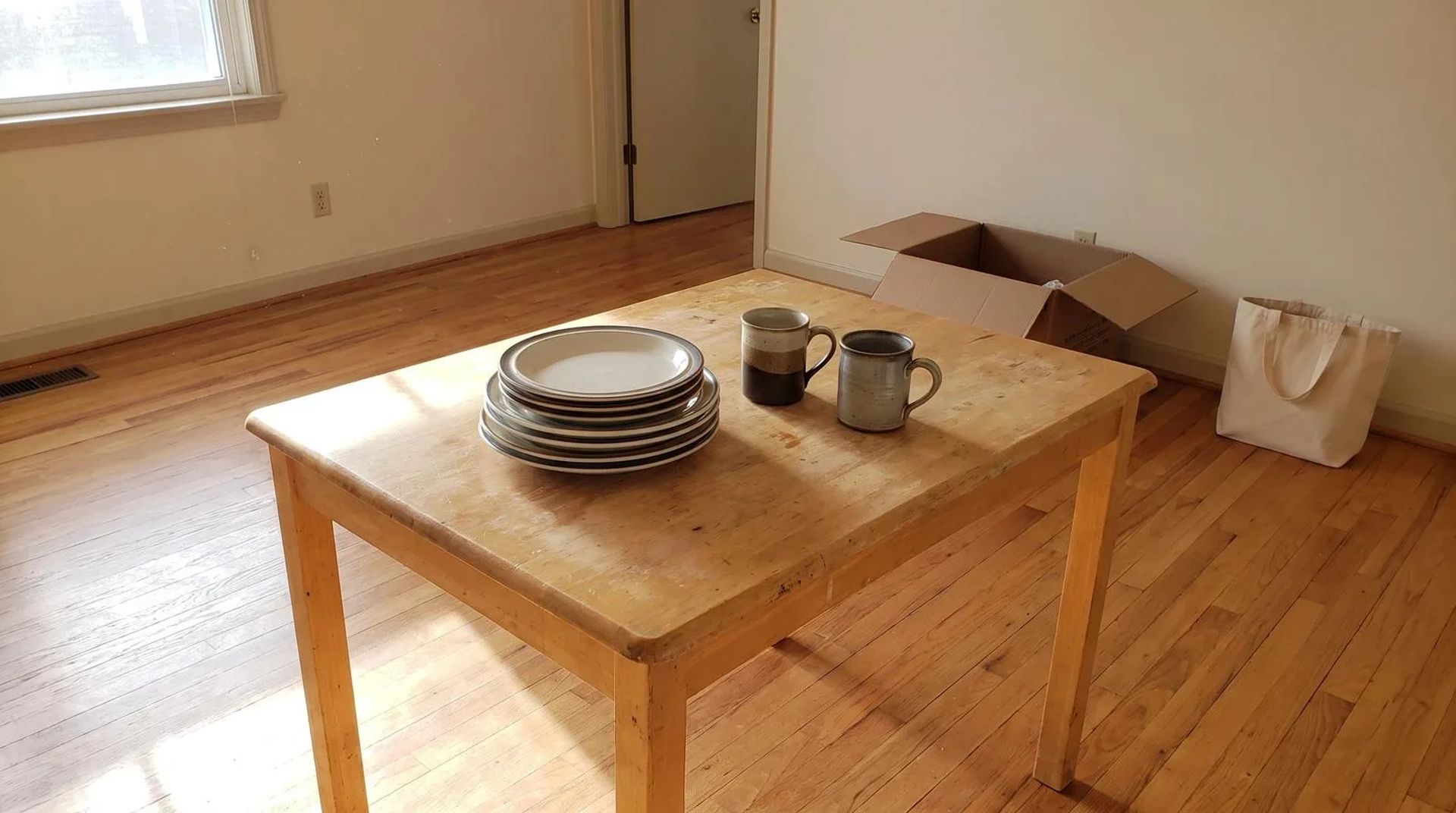
Three adult kids stood around a kitchen table in Nampa, a week into their mom's estate cleanout, sorting the last of the small stuff. The jewelry had been easy. The truck title, easy.
Then somebody picked up a chipped set of everyday dishes and the room went quiet.
Those dishes weren't worth ten dollars. They were just the ones everybody ate off of every night for twenty years.
That's usually how it goes. Valuables get sorted in an afternoon. It's the cheap stuff that stalls a family out.
Why estate cleanout fights usually aren't about money
Nobody is really fighting over a mixing bowl. They're fighting over who gets to keep the version of the person they remember.
The sister who lived in Eagle and drove over every Sunday remembers a different mom than the brother who called from Denver twice a month. Both are grieving.
Neither one is wrong about what she would have wanted, which is exactly the trouble. Grief makes people say things they'd never say at Thanksgiving.
So when a family asks how to handle the split, we don't tell them to be reasonable. Reasonable isn't the problem. The problem is almost always that nobody agreed on a process before the picking started.
Sort that out first and most of the arguments never happen.
A picking order that actually holds up
Here's what works. We've watched it hold in houses from the North End out to Caldwell.
Everyone walks the whole house first without claiming anything. Just look. One slow lap through every room, the garage and the shed included, before a single name goes on a single item.
Then you pick in rounds. Who goes first? Draw numbers, go oldest to youngest, flip a coin. It matters far less than the fact that the order is fixed before anyone starts.
One item per turn, then it's the next person's turn. If two people want the same thing, whoever's turn it is takes it, and the other person picks first next round.
Passing is allowed, and people should. Most folks run out of things they genuinely want after four or five rounds. That surprises almost everybody.
Anything with real dollar value, a ring, a coin collection, a decent rifle, gets appraised before rounds start instead of argued about during them. An appraisal runs a couple hundred dollars around the Treasure Valley. It settles more than any conversation will.
Tip: Photograph every room before anyone takes anything, then keep a shared note of who claimed what. It's not about distrust. Six months from now nobody will remember who ended up with the good cast iron, and that gap is where resentment grows.
What an estate cleanout looks like after everyone has picked
Here's the part families underestimate. When the picking is done, ninety percent of the house is still sitting there.
That's normal, and if your parent kept a lot, it can be closer to a hundred. No shame in that. Plenty of the homes we work in belonged to someone who held onto things because letting go was genuinely hard, and that's worth saying out loud before anyone starts calling the house a mess.
A three-bedroom in Meridian off the Ten Mile corridor might send home three carloads of keepsakes and still have a full house of furniture, kitchenware, tools, paperwork, and forty years of garage.
From there it's sorting into sell, donate, and haul. Sell is always smaller than people hope. Used furniture moves slowly around here unless it's genuinely nice.
Donation carries more of the load, though most Treasure Valley charities want items clean, working and complete. A stained mattress or a dresser missing a drawer gets turned away.
The rest goes to the Ada County landfill or gets recycled, and that's where the real labor lives. Most full-home estate cleanouts around Boise run three to five days with a crew. One room or a small apartment is usually a single day.
Cost tracks volume and stairs more than square footage. A packed two-story on the Bench runs higher than a bigger ranch with a wide-open garage.
Set a deadline, because the house won't wait
If the home is selling, the closing date builds your calendar for you. If it's staying in the family a while, pick a date anyway.
An empty house in Canyon County through winter is a real risk. Somebody turns the heat down or shuts it off, a pipe lets go in January, and now there's water damage stacked on top of everything else.
Summers cut the other direction. A garage full of old paint, aerosols and chemicals sitting in 100-degree heat isn't something to punt another year.
Six to eight weeks from the first walkthrough to an empty house suits most families. Much longer and the momentum dies. Rush it and somebody feels pushed through something they only get to do once.
Pick the date together, early, and write it down where everyone can see it.
The bottom line
The split goes sideways when there's no process and everyone's guessing. It goes fine when the family settles on an order, sets a deadline, and gives the sentimental stuff the same care as the valuable stuff.
We handle what comes after: the sorting, the donation runs, the hauling, and leaving the place empty and swept. Yes, we'd like the job. But if you just need somebody to talk through a realistic timeline for your mom's house, that's a fine reason to call too.
We're at (208) 330-3615. No pressure either way.
