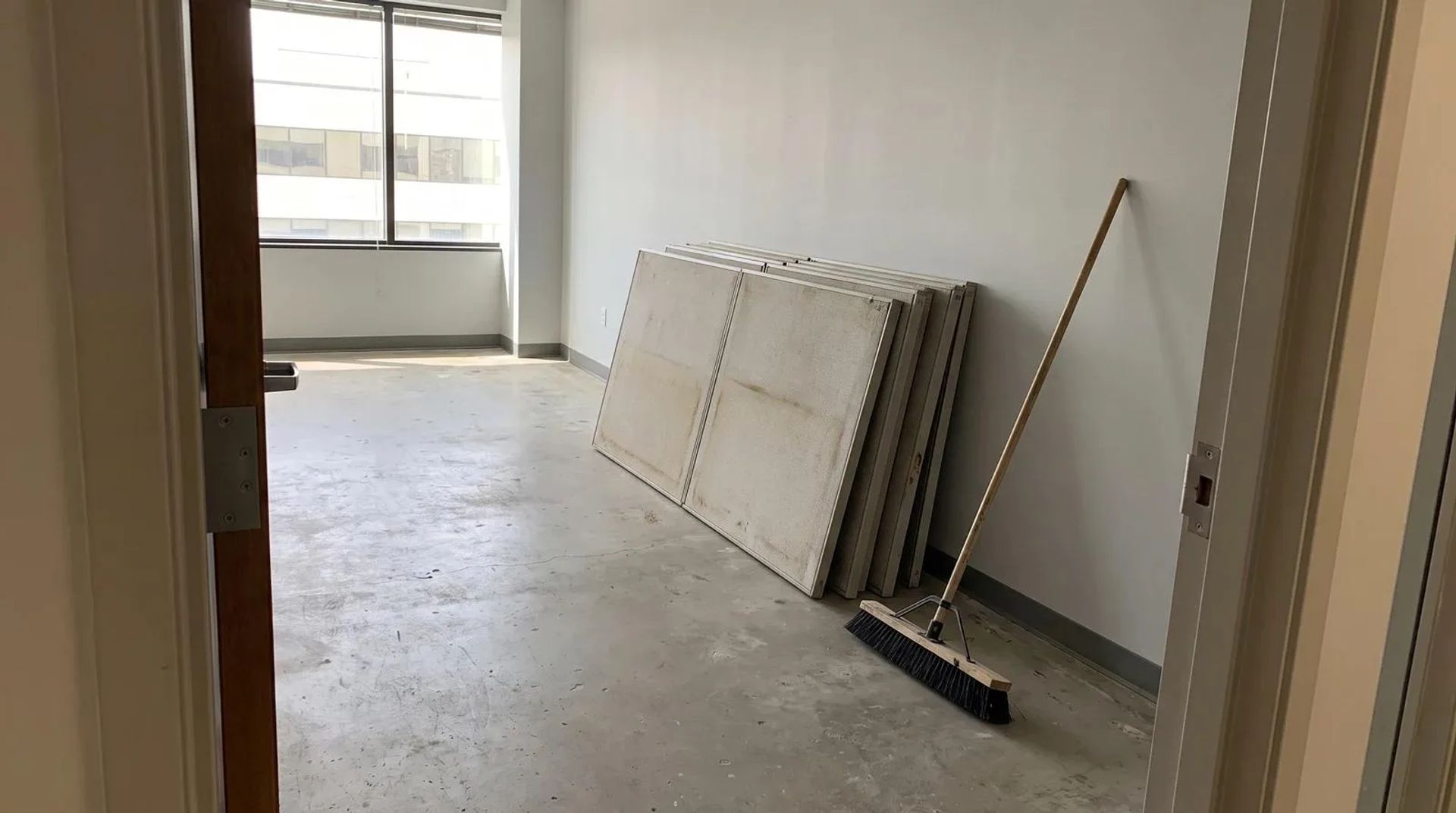
Three days before his lease ran out, a guy renting an office suite off Emerald Street asked me what "broom clean" meant. He figured it meant sweeping. His landlord meant a full commercial cleanout: cubicle walls down, dead printers gone, shelving pulled off the drywall, and nothing left in the back room that used to be a break area.
That gap costs people money. Schedule the work a week early and it's a normal line item you plan for. Let the landlord handle it after you've dropped off the keys and it comes out of your deposit at whatever rate they think is fair.
Here's how to read that clause, and what it usually takes to actually satisfy it.
What "broom clean" actually means on a Boise lease
Most commercial leases around here use the phrase and never define it. In practice, landlords in Boise and Meridian mean empty, swept, and stripped of anything you brought in or bolted on.
Empty means empty. Furniture, inventory, pallets, the broken chair in the storage closet, the fridge nobody wants to claim. If it came in the door with you, it goes out with you.
Attached is the part people miss. Wall anchors, shelving brackets, cable trays, sign backing, the vinyl someone stuck on the front glass. Some leases say fixtures stay. Some say they go. Read yours. If the wording is vague, get an answer in writing before you start prying things off the wall.
Sweeping is the easy part. Nobody expects a warehouse detailed like a house. They expect to walk in with a flashlight and see floor.
Tip: Ask your property manager for a written punch list before your final week, and take photos the day you hand over the keys. Ten minutes of email settles the argument over whether that mezzanine shelving was yours or theirs.
Commercial cleanout work, from office suites to shop space
Offices and retail usually turn out lighter than people fear and heavier than they hoped. A 1,200 square foot suite is often one day. It's the back room that gets everybody: file boxes, ten years of marketing materials, three monitors that don't power on, the holiday decorations from a company party in 2019.
Shop and warehouse space is a different animal. Racking, a workbench bolted to the slab, a parts washer, a stack of tires in the corner. Anything holding fluid or running a compressor gets handled on its own, because it can't ride to the landfill mixed in with the rest.
Restaurants are their own category. Hood systems, grease, walk-in panels, and a floor that needs a lot more than a broom. Closing a kitchen in Nampa or downtown Boise? Start earlier than feels necessary.
Old paperwork and electronics slow a job down too. Client files shouldn't ride in an open trailer down Chinden, and monitors aren't landfill material. Sorting as we load beats sorting twice.
Most of our work is inside homes, so honestly, a commercial space with a roll-up door and no stairs is the gentler end of what we do.
What a commercial cleanout costs around here
Nobody can price this off square footage, and anyone quoting a firm number over the phone is guessing. Three things move it: volume, weight, and access.
Volume is obvious. Weight is the one that catches people, because the Ada County landfill charges by the ton and dense stuff like cabinetry, racking, and old countertop adds up fast. A trailer of foam packing weighs almost nothing. A trailer of file boxes is a very different ticket.
Access might matter most. Ground floor, roll-up door, room to back a trailer in? Cheap version. Second floor off the Ten Mile corridor with a shared elevator and a loading zone you have to reserve? That's a long day, and labor is what you're paying for.
Realistically, a small office suite lands somewhere from the low hundreds up to around a thousand. A full retail space with fixtures and shelving usually runs a few thousand. Warehouses and restaurants go higher, and disposal fees are a real chunk of that. We'd rather walk the space and give you a real number than pull one out of the air.
Should you just do it yourself? Sometimes, yeah. Desks and boxes, two friends, a borrowed trailer, one Saturday. That math works fine. It stops working at weight and disposal, because once you're into racking, appliances, or e-waste you're making five trips and paying at the gate every time.
Timing it so you don't eat an extra month of rent
The most common mistake is waiting for the last weekend. Most commercial leases want the space returned in condition on the final day, not mostly done by then. A holdover month in this market hurts, and landlords here aren't especially generous about it.
Give yourself a week of buffer. If the walk-through turns up something, you've got time to fix it instead of paying rent on an empty suite.
Season matters more than people expect. A metal warehouse in Caldwell hits triple digits inside by early afternoon in July, so we start at dawn and things slow down after lunch either way. Winter means icy loading docks and shorter daylight for dump runs. January in Eagle is a genuinely different job than August in Nampa.
The bottom line
Broom clean means empty, swept, and stripped of whatever you added. Get that definition in writing, start about a week early, and pay attention to weight and access, because that's what actually drives the number.
If you want a straight answer on a commercial or rental cleanout in Boise, Meridian, Nampa, or anywhere in the Treasure Valley, give us a call at (208) 330-3615. We'll walk the space, tell you what it takes, and you can decide from there.
